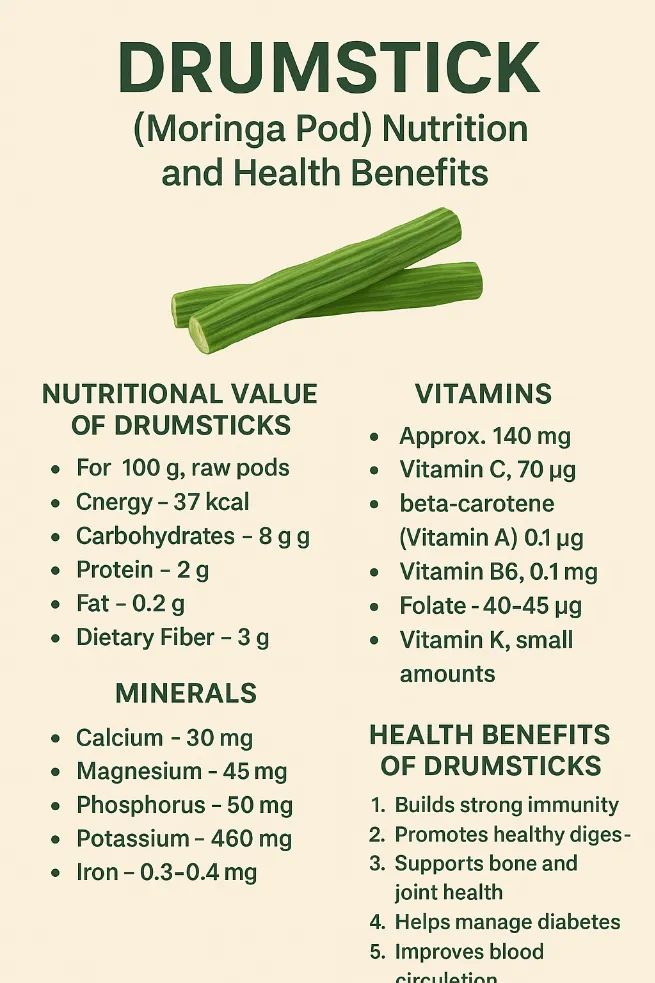
Drumsticks, also known as moringa pods, sahjan ki phalli, or shigru, come from the Moringa oleifera tree, a plant that has earned the name “miracle tree” because almost every part of it is edible and highly nutritious. The tree is native to South Asia but is now cultivated widely in tropical and subtropical regions. In India, drumsticks are a familiar ingredient in curries, sambhar, soups, and even pickles. While many people enjoy them for their unique taste and texture, not everyone realizes just how beneficial these slender green pods can be for health.
This article explores the nutritional content, health benefits, traditional uses, and culinary applications of drumsticks, offering a complete guide to why this humble vegetable deserves a place on your plate.
Nutritional Value of Moringa
Drumsticks are low in calories but rich in essential vitamins, minerals, and fiber. They provide an excellent balance of nutrients, making them suitable for a wide variety of diets.
Approximate Nutrition per 100 g of Raw Drumsticks
- Energy: ~37 kcal
- Carbohydrates: ~8–9 g
- Protein: ~2 g
- Fat: ~0.2 g
- Fiber: ~3 g
Vitamin Content
- Vitamin C: ~140 mg – A powerful antioxidant that supports immunity, skin repair, and wound healing.
- Vitamin A (as beta-carotene): ~70 µg – Important for healthy eyes, glowing skin, and strong immunity.
- Vitamin B6: ~0.1 mg – Helps in brain development and supports metabolic functions.
- Folate: ~40–45 µg – Crucial for cell division and beneficial for pregnant women.
- Vitamin K: Small amount – Supports blood clotting and bone metabolism.
Mineral Content
- Calcium: ~30 mg – Strengthens bones and teeth.
- Magnesium: ~45 mg – Regulates nerve and muscle function.
- Phosphorus: ~50 mg – Supports bone structure and energy release.
- Potassium: ~460 mg – Helps control blood pressure and heart rhythm.
- Iron: ~0.3–0.4 mg – Contributes to healthy red blood cells and oxygen transport.
While the numbers may appear modest compared to concentrated supplements, what makes Moringa special is their balance of nutrients combined with natural plant compounds that offer synergistic health effects.
Health Benefits of Moringa
1. Builds Strong Immunity
Drumsticks are one of the richest natural sources of vitamin C. Regular intake strengthens the immune system, making the body more resistant to infections, coughs, and seasonal colds. The antioxidant properties of vitamin C also protect cells from damage caused by free radicals.
2. Promotes Healthy Digestion
The dietary fiber in drumsticks supports smooth digestion by preventing constipation and promoting regular bowel movements. Fiber also acts as food for beneficial gut bacteria, which in turn improve nutrient absorption and overall gut health.
3. Supports Bone and Joint Health
Calcium, phosphorus, and magnesium work together to keep bones strong and joints flexible. For people suffering from arthritis or joint pain, drumsticks may provide natural relief due to their anti-inflammatory compounds.
4. Helps Manage Diabetes
Studies suggest that drumsticks may help lower blood sugar levels by enhancing insulin activity. The combination of fiber and plant compounds slows the absorption of sugar in the intestine, making it a helpful vegetable for diabetics when included in meals.
5. Improves Blood Circulation
The modest amount of iron in Moringa contributes to healthy hemoglobin levels, helping reduce fatigue and weakness caused by anemia. When combined with vitamin C, which enhances iron absorption, the effect is even more beneficial.
6. Enhances Skin and Hair Health
Antioxidants like vitamin C and vitamin A protect the skin against premature aging, reduce acne, and promote natural glow. Drumsticks also encourage the production of collagen, a protein that maintains skin elasticity. Their nutrient content also supports hair growth and prevents hair fall.
7. Aids in Heart Health
High potassium levels in Moringa help regulate blood pressure, while fiber helps reduce cholesterol levels. Together, these factors contribute to better heart health and reduced risk of cardiovascular diseases.
8. Reduces Inflammation
Chronic inflammation is linked to many health problems such as arthritis, obesity, and heart disease. Drumsticks contain natural anti-inflammatory compounds that may help reduce swelling and pain, especially in joints.
9. Supports Reproductive Health
Traditionally, drumsticks have been considered beneficial for reproductive health. They are believed to improve fertility and support uterine health, though scientific research on this is still developing.
- कांच नगरी में ‘Gray Emergency’: Firozabad AQI 395 के बीच सिसकती सांसें
- Republic Day 2026; मुख्य अतिथि कौन हैं? Who is the chief guest?
- वन्दे मातरम्(Vande Mataram) के 150 साल: 1875 से 2025 तक की महान यात्रा
- Firozabad की हवा में घुला ‘कांच का गुबार’: क्या 158 का AQI वाकई ‘सामान्य’ है?
- Tariq Rahman: क्या Bangladesh का भविष्य अब ‘London’ से तय होगा ? India के लिए इसके क्या मायने हैं?
Drumsticks vs. Drumstick Leaves
Both the pods and the leaves of the moringa tree are edible, but their nutrition levels vary:
- Drumstick Pods are lighter in nutrition but easier to digest and widely used in everyday cooking.
- Drumstick Leaves are far richer in protein, iron, calcium, and antioxidants, often considered a “superfood.” They are commonly dried and powdered to make moringa leaf supplements.
Using both pods and leaves in the diet ensures maximum benefits.
Traditional Uses of Drumsticks
In Ayurveda, drumsticks are valued for their ability to balance the three doshas (Vata, Pitta, Kapha). They are believed to:
- Improve digestion
- Purify the blood
- Boost energy levels
- Strengthen the reproductive system
- Reduce symptoms of respiratory issues like asthma and bronchitis
Traditional home remedies include using boiled drumstick water for sore throats or consuming drumstick soup during fever for faster recovery.
Culinary Uses of Drumsticks
Drumsticks are versatile and can be added to many dishes. Some popular ways to enjoy them include:
- South Indian Sambhar: A classic dish where drumsticks are simmered with lentils, tamarind, and spices.
- Vegetable Curries: Drumsticks can be cooked with potatoes, brinjal, or beans.
- Soups and Stews: Drumstick soup is often consumed as a remedy for colds and digestive problems.
- Pickles: Drumsticks can be preserved with spices and oil to make tangy pickles.
- Chutneys: The tender pods and even flowers of the moringa tree can be used to prepare flavorful chutneys.
When cooking drumsticks, it is best to cut them into medium-sized pieces and simmer until the outer skin softens slightly while the inner pulp remains tender.
Tips for Buying and Storing Drumsticks
- Choose fresh, firm, green pods without blemishes or cracks.
- Avoid overly mature pods, as they become fibrous and hard to eat.
- Store drumsticks in the refrigerator, wrapped in a damp cloth, to keep them fresh for up to a week.
- For longer storage, they can also be lightly blanched and frozen.
Conclusion
Drumsticks may look like a simple vegetable, but their nutrient density, health benefits, and versatility in cooking make them an invaluable addition to the diet. From boosting immunity and aiding digestion to supporting skin, bones, and heart health, drumsticks provide a wide range of advantages without adding excess calories.
By incorporating them into curries, soups, or traditional dishes, you not only enhance flavor but also enrich your meals with a variety of vitamins, minerals, and antioxidants. Whether eaten as pods or combined with moringa leaves for added nutrition, drumsticks stand out as one of nature’s most affordable and effective health foods.
- iPhone 17 Pro Max Launch Date: 10 Reasons to Wait for iPhone 17 Series
- How to buy a perfect jacketcoat trouser | Josforup
- क्या BRICS देश मिलकर अपनी मुद्रा बना सकते है?
- Best Website Speed Test
- JPG to PNG to WEBP converter
- Convert Any File Into PDF
- Facts About Tomatoes That You May Not Know
- Age Calculator
- Vicky Kaushal & Katrina Kaif Announce Pregnancy: A New Chapter Begins
Table of Contents
Aaj Ka Rashifal agra Air Quality Index amazing fact Aquarius Aries Astrology Cancer Capricorn Daily Rashifal environmental issue Exams fact firozabad Firozabad AQI Firozabad pollution Firozabad का AQI Gemini GK Notes for Exams health warning hindi horoscope important questions Indian railway industrial chimney kanpur Leo Libra Moderate air quality PM2.5 PM10 Poor AQI Rashifal respiratory health Sagittarius Scorpio South Asia smog Taurus Unhealthy UP air pollution Uttar Pradesh Virgo ज्योतिष तथ्य वायु प्रदूषण