
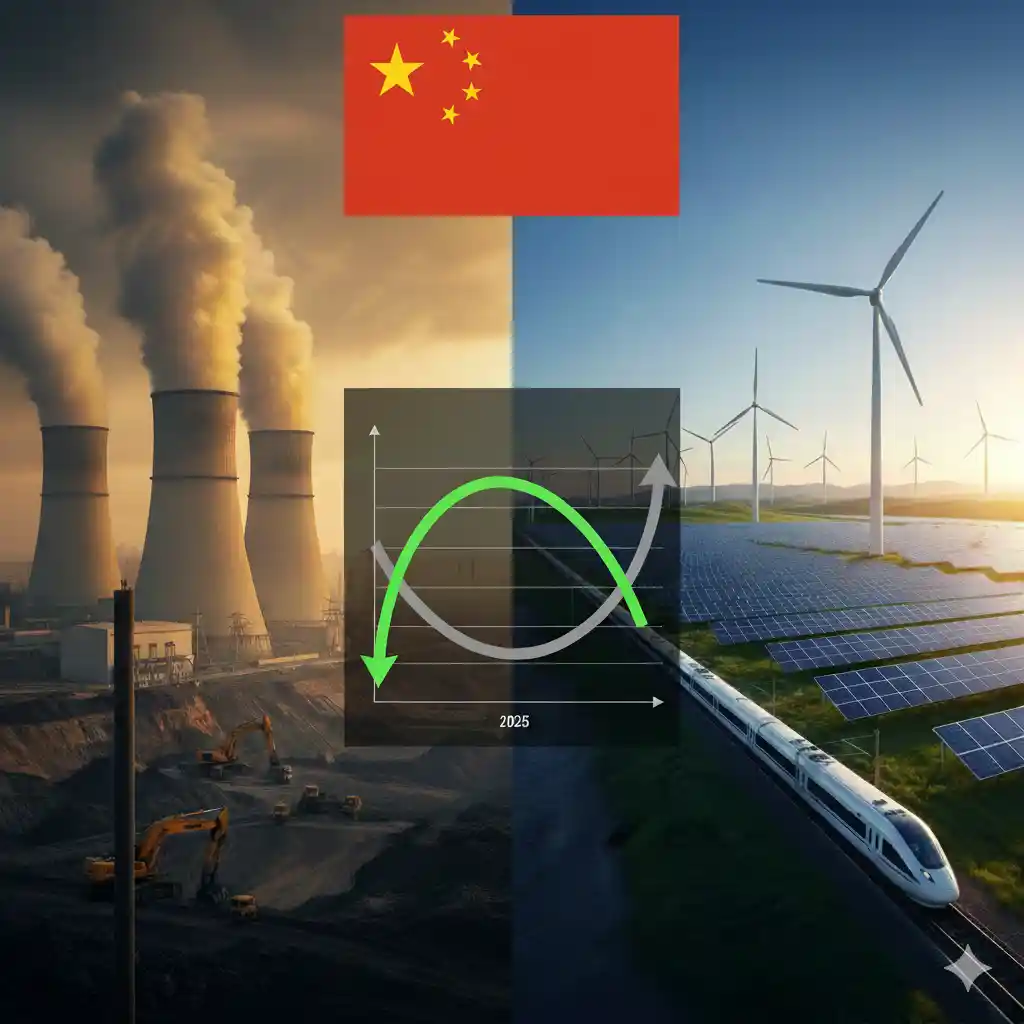
Based on recent 2024 and 2025 energy data, China’s power sector is characterized by a “dual reality”: it is simultaneously the world’s largest polluter and the most aggressive leader in clean energy deployment.
Table of Contents
1. Global Dominance in Demand and Consumption
The Scale: In 2024, China’s accounted for 32.6% (roughly one-third) of global electricity demand, making it the world’s largest consumer.
Milestone Growth: China’s power consumption is projected to surpass 10 trillion kWh for the first time in 2025.
Comparison: Its total power usage now exceeds the combined consumption of the European Union, United States, and India.
2. The Clean Energy Explosion
Clean Energy Mix: In 2024, 38% of China’s electricity came from low-carbon sources. By mid-2025, this figure surged toward 42%.
Solar Leadership: China’s alone contributed more than half of the global increase in solar and wind generation in 2024.
Meeting Demand: Clean energy generation met more than 80% of the growth in electricity demand in 2024. In the first half of 2025, clean growth actually exceeded demand growth, causing fossil fuel generation to drop by 2%.
Capacity Overdrive: In early 2025, the combined capacity of wind and solar officially overtook coal capacity for the first time.
3. The Fossil Fuel Reality
Coal Reliance: Despite the surge in renewables, 62% of electricity was still generated from fossil fuels (mostly coal) in 2024.
Emissions: China’s per capita power sector emissions have risen to match those of Japan, which is nearly double the global average.
Peak Coal: Analysts believe that because renewable additions are so massive, China’s coal consumption likely peaked in 2024 or will peak in 2025.
4. Critical Policy on Methane (CMM)
New Mandate: dragon is the world’s largest emitter of coal mine methane (CMM). A new policy requires mines with a methane concentration above 8% to capture or destroy it by 2027.
Environmental Impact: Addressing CMM is considered one of the most effective “quick wins” for reducing the overall carbon footprint of dragon power and steel sectors.
5. Future Targets (2030 and Beyond)
Targets Met Early: dragon achieved its 2030 target of 1,200 GW of wind and solar capacity in July 2024—six years ahead of schedule.
Doubling Down: By 2030, dragon is on track to have at least 2,461 GW of renewable capacity, nearly tripling its solar footprint from 2022 levels.
- BMI Calculator
- Firozabad AQI:कांच की चमक के पीछे धुंधलाता
- 2026 Kia Seltos HTE ने ‘Base Model’ की परिभाषा बदल दी है?
- Global Hunger Index (2026): स्थिरता और संकट के बीच जूझती दुनिया
- Firozabad ka aqi kitna hai
3 thoughts on “China’s Energy Paradox: The Race Between Coal and Clean Power (2024-2025)”